Saturday, 10 December 2016

Just need to be alone...
Be away from the world..
And immerse in the sand..
Merge with the foldings...
Play with the earthly beings..
Converse with the angels..
And eventually meet the supreme light..

Tuesday, 15 March 2016

Bertha Mason in Jane Eyre


     Bertha Mason, the insane wife of Rochester and the mad woman in the attic is the fictional character of Charlotte Bronte's novel Jane Eyre. Bertha is presented to the readers only after the completion of half of the narration, ie; at the time when the marriage between Rochester and Jane Eyre is called off. Bertha is portrayed as:
                 'In the deep shade, at the further end of the room, a figure ran backward                    and forward. What it was, whether beast or human being, one could not,
                  at first sight , tell: it groveled, seemingly, on all fours; it snatched and                   growled like some strange animal: but it was covered with clothing; 
               and quantity of dark, grizzled hair, wild as mane, hid its head and face' (chptr XI, pg: 367).
     This is the description made by Jane Eyre, when she and the readers see Bertha for the first time. We, the readers got to know about the life of Bertha only through the narration of the unhappy husband, Rochester. He says, Bertha is born to a well to do family of Jamaica as a heir of Creole. And he was persuaded by his father to marry her, in terms of her wealth. And his father has hidden the fact of her madness from him. He adds that after their marriage Bertha becomes completely insane hence he locks her up in the attic for ten years. Almost at the end of the novel Bertha perishes by throwing herself from the roof and freeing her husband from the bond of marriage.


Saturday, 12 March 2016

Antoinette in Wide Sargasso Sea

                               
     Antoinette Mason in Wide Sargasso Sea by Jean Rhys can be considered as an outcome of the depiction of the character of Bertha Mason in Charlotte Bronte's Jane Eyre. Even though Wide Sargasso Sea is published as a sequel of Jane Eyre, Jean Rhys presents Antoinette as the past of Bertha. In short, through this novel Rhys portrays how Antoinette transfered to Bertha Mason, the mad woman in the attic. While Bronte's character evokes hatred in the readers, Rhys's Antoinette captures our sympathy.
     When the novel opens, we sees the small Antoinette, a child who is being mocked at by friends for being a white creol. Later as an isolated being in a convent and as a distressed wife of Edward Rochester, an English man. Even though Antoinette knows her husband views her as inferior because of being belonging to White Creole, she still has brutal honesty towards him. Rochester considers Antoinette as a mad woman and thereby she is being locked up at the attic. Rhys's Antoinette is not only a victim of patriarchy but also of the ugly racism.
     

Friday, 11 March 2016

Mona Caird


Alice Mona Caird(nee ALice Mona Alison, also called Alice Mona Henryson Caird) was a Scottish novelist and essayist whose feminist views sparked controversery in the late 19th century. Caird was born in Ryde, Scotland in 1854. From early childhood itself she started to write plays and stories, which reveals a proficiency in French, German and English as well. In December 1877, she married James Alexander Henryson Caird, he was supportive of her independence. The Cairds had one child named Alison James. Her husband died in 1921.
          Caird published her first two novels, 'Whom Nature Leadeth' and 'One That Wins', under the pseudonym "G. Noel Hatton", but these drew little attention and subsequent works were published under her own name. She came to prominence in 1888 when the Westminister Review printed her long artice 'Marriage', in which she analysed indignities suffered by women in marriage. Her numerous essays on marriage and women's issues written from 1888 to 1894 were collected in a volume called 'The Morality of Marriage and Other Essays on the Status and Destiny of Women' in 1897.
          Continuing to write fiction, Caird published the novel The Wing of Azrael (1889), a short story collection 'A Romance of the Moors in 1891, in 1894 her famous novel 'The Daughters of Danaus' was published, the novel has been considered as a feminist classic. Also well known is her short story 'The Yellow Drawing Room'. Such of her works have been reffered to as 'fiction of the New Woman'. She was also an active opponent of vivisection. She was a member of the Theosophical Society from 1904 to 1909. Mona Caird died on 4 February 1932 in Hampstead.

Tuesday, 2 February 2016

Reaction of Nani

           Oh God, I don't know what has happened to today's girl. Especially that girl of my Lalitha. She is such a nuisance being. She doesn't know how to behave with others. Even doesn' t know what to ask, when to ask and how to ask. It's as if asking whatever things come to her little crooked brain. I don't know how my Lali tolerate all her deeds, Lali is right she is born as plague in her life. She even questions everyone. It doesn't matters her whether it's the male member of our home. I fear she might bring a bad name upon my family. Yesterday she even questions the practice of Ashtami saying "If you don't love girls, then why do you worship them"! Ho.. it created goose bumps in me and even now I couldn't come out of it's shock. She even didn't accept the halwa, tikka and paise that I have given. I have a lot other grand daughters, thank God there isn't any other like this creature. She even didn't heed to advice instead argues back at it. Such a stupid girl. I don't know whose evil eye has effected her. Oh..God lead her to the correct path and bestow her with all the blessings that you have provided upon my other girls. Only you can lead her through the proper path. 

Wednesday, 13 January 2016

A Room of One's Own

      Virginia Woolf, one of the modernist of the 20th century and the famous English writer, was never my favourite, but her extented essay 'A Room of One's Own' which was first published in 1929 has made her one. In this essay she explores women as a writer and a fictional character. It's written as a part of a thesis on the topic Women and Fiction. Hence, this essay is full of Woolf's enquiry over the topic. The six chapters in the essay in a way or the other conveys innovative ideas. Once a reader enters into the essay he or she never feels bored, it's written in such a manner which varries by it's each nook and corner from the usual essays which a reader has to read by an external compulsion. Apart from other essays which we are forced to read, this non- fiction itself forces us or casts a magical spell on us to be indulged in it and creates the same anxiety that a novel creates. It might be because of the fictional style Woolf has opted,and also inclusion of poems, short fictions and a bit of experience made this a wonderful non fiction.
           Essay begins with her enquiry regarding the thesis in an imaginery campus named 'Oxbridge'. Where she founds that woman can enter to the campus only after getting a certificate from the Dean. Later she argues that for a woman to write a fiction she must need money and a room of her own. In the second chapter she moves to London and search for books written about women but could find only a few and that too written by men and which is out of their anger towards women. In this chapter she states that sometimes men too might be a victim of their education and culture. And also throws lot of questions like, why did men drink wine and women water? Why was one sex so prosporous and the other so poor? And a lot more.really these questions trigger our minds too, to find adequate answers. Later she turns into historical documents where she belives she might finds some facts about women and literature. Somehow it was also in vain. However, she potrays a female figure called Judith Shakespeare, an imaginary sister of William Shakespeare. Just like Shakespeare Judith also has all the ' celestial fire' but couldn't shine like him, only due to gender difference. Woolf might be right if a woman like Judith has lived in the Elizabethen era, her fate mighn't be differ from that of Judith. It clearly shows the destiny of woman who has all the sort of creativety in them, and they were not allowed even to touch pen and book and hence they never dared to. But there were women who couldn't hide all those godly powers in them, even then they have to hide their identity and appear to the world in male pseudonyms.Later Woolf traces out some women writers. And she argues that women must feel and see differently than men and they also write differently if they are true to themselves. In the last chapter Woolf states that currently women are writing just as men and also states, women have creative powers which differ from men and education should bring out those differences. She concludes the essay saying "it is fatal for anyone who writes to think of their sexes." Even when she wides up the essay her thesis on women and fiction is still unwritten.
          This essay is written as if scribbling down whatever thoughts have emerged in Woolf's mind, this might be the reason why the readers wouldn't feel any sort urge to stop in between the essay. It is usually considered as a feminist text, but it never mocks at the norms of patriarchy and never argues for the importance of women over men in the male centered society. Instead, it simply informs us that even in the field of literature women haven't got equal or even almost equal chances as men had got. I usually got confused regarding the term inequality based on gender. Was this inequality present at the very birth of human life itself ?. However, I think notion of the society is like that. Being born and brought up as a woman, I think, if women are allowed to do the things that the male centered society is boasting only themselves could do then it will be the same or far better than men are doing. Because, the Almighty God hasn't bestowed any so called superiority over the male sex.

Tuesday, 22 December 2015

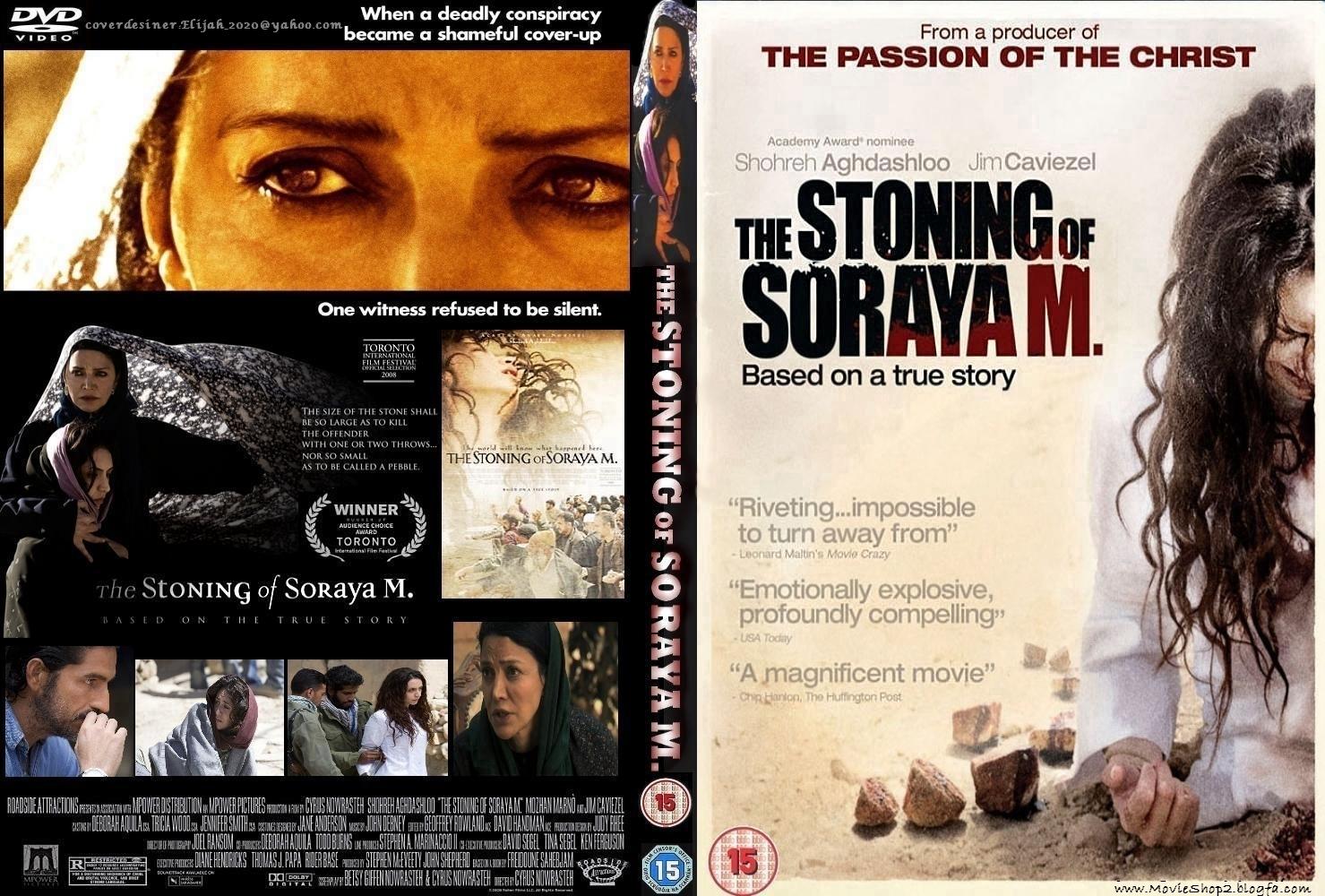
Review on The Stoning of Soraya M

      The Stoning of Soraya M is an Iranian movie, directed by Cyrus Nowrasteh based on the book of the same title by Fridounce Sahebjam. It can be counted as one among the movies which has the power to make the eyes of the audience drenched with tears... A movie which has the capacity to linger and disturb the audience... and a movie which somehow questions the world ruled by men where the women have to get suppressed for each and every deeds...

CAST:
Shohreb Aghdashloo - Zahra
Mozhen Marno - Soraya
Navid Negahban - Ali
David Diaan - Ebrahim
Parviz Sayyad - Hashem


      The movie starts with showing Zahra, aunt of Soraya, who is picking some bones and burying them near a river bank afer washing. The very instant we see Zahra, we feel as if there is something mysterious in her, the way she covers herself with a cloth above her dress etc shows something mysterious. On the other side, a journalist has been shown who is standing beside a repairing shop to get his car repaired. Zahra on the way back to her home comes across the journalist and tries to speak to him, but Mullah and Ali chases her away saying that she is insane. But at last after certain efforts Zahra succeed in talking with him. Later on she narrates the story Soraya,her niece to him and asked him to record it.
          Ali is the husband of Soraya and the couple has two daughters and two sons. Ali has turned his two sons against Soraya and makes them do what he wants. He has asked Mullah, by warning him about his bad past,  to persuade Soraya in divorcing Ali, thereby he can marry a 14 year old girl, with whom he has promised to release her father who is in jail. Mullah tries to convince Soraya to be his temporary wife, but Soraya refused it. Following this, a woman dies and Mullah and Ali talk to Zahra to convince Soraya to take care of Hashem,the widower. Zahra argues that Soraya can do the job only if she is paid. Later Soraya starts to work for Hashem, and Ali takes this as an opportunity to spread rumours about Soraya saying that she has been unfaithful towards him, for making her stoned to death which thereby allows him to marry again. Mullah and Ali start to spread rumours about Soraya's infidelity and also threatens Hashem in providing supporting evidences to build their case against Soraya.
         In the same evening Ali beats up and drag Soraya on the streets accusing her fidelity. Zahra rescues Soraya and asked for a private meeting. Hashem lies that he has engaged in adultery with Soraya. After continues discussion, it was decided to stone Soraya to death. The villagers start to collect stones and dig a pit where Soraya has to be placed during stoning. At the same instant the president Ebrahim, the one and only good minded male in the entire village, prays to God to give a sign if what they are going to do is not right. Soraya was dressed in a white rob, with her hair left loose, hands tied at the sides and was put in the hole which has dug like a grave and she was covered with soil. At the same instant a carnival van has arrived but it was chased away,  I think that, really it was a sign showing that what they are doing is not right. The first chance to stone Soraya was given to her father but he missed two chances, at the instant a woman shout out it is the sign but none listened. Later Ali throws and it hits her on the forehead and blood drips down her face with a cry, it's the most horrific scene in the entire film. Hashem was also given stones but he leaves the venue crying.  But the crowd didn't stop stoning her they stoned until her her white rob drenched with redness of blood. Ali went near her to confirm whether she is dead, but found signs of life and shouted out ' this BITCH is still alive'. Again the crowd stoned her until she was dead. Ali was the last one to leave the venue, by passing a deadly smirk to the dead Soraya. It's this grin over his face which gives a devilish look to him. Zahra as not allowed to bury her body and it was left by the river side.


        This is the story narrated by Zahra, after recording the entire thing the journalist starts to leave but he was stopped by Mullah and destroys the tape later leaves him. As he drove away Zahra appears in the way and hands over the true tape and shouts ' the whole world will know about the injustice which had happened and all these is because of the God that I love, who is great'. Later Ali's marriage with the girl has broke off and Hashem also admits that he was forced by Mullah and Ali to lie.

     As I already mentioned this film wouldn't leave it's audience without having tears in the eyes especially in the eyes of women audience, because, it's the story of a woman, exactly, not of a single woman but of a lot of others like Soraya...the fact is the film is basesd on a TRUE STORY of a woman similar to the titular character, Soraya Muntecheri. As the title itself suggests, it is a movie about stoning, or it can be considered as a satire over the practise of stoning prevailed in the religion of Islam and Christianity. However, to a certain extend this sort of punishment is required, unless or otherwise there won't be any limit in commiting sins. As Soraya has mentioned in the movie " I am not afraid of death but, of the stones and pain ".like this due to the fear of the pain caused by these sort of punishments people may keep a distance from such sins. But the sad part of it is, there will be innocent beings like Soraya, who may become a victim for such dreadful punishments. In the movie, the whole village knew the demeanour of Ali how rude and cruel he is towards his wife, yet they stand in support of him,  the only reason behind it might be the power that men's voice  has in society. Ali being a police officer, should be the one in bringing solace in between the people and the one with whom Soraya must feel secured of but... The character of Mullah is another symbol of cruelty in the people, who by appearance seems to be as a perfect one. Mullah, being a respectable muslim man, always carries the Holy  Qur'an and the Holy thread of Thasbeeh, hence has a perfect appearance that a pious muslim has but,not so pure as he seems and needs to be, instead has the stain or black mark of sin under his cassock. Whereas Ebrahim, who is not a perfect muslim by appearance but a perfect one by heart. This is not the case of the film alone, but also of the real world where we live. In short, the movie succeeded in passing the light over today's reality, where minute scrutiny of each individual is required in comprehending their real nature.Just as the characters, each and every scenes in the movie has a lot to tell,to question and to inform, there isn't any scene which is in vain. Especially the unbearable scene of stoning, which is the main reason for the drops of tears in the eyes, when Ali throws the stone over her, I myself feel to slap over his face.... and to stop him from throwing the stone... because, Mozhan (Soraya) has created that much intimacy  through her acting. The most untolerable scene for me is, when her son stones her... they are stoning the one who gave birth to them...and the one who loves them more than anyone... And when Ali approaches Soraya to confirm her death, at first I thought he must feel guilty for all the things he had done.. because, after all she is his wife, but the reverse took place there isn't any sort of remorse even in his voice that is why instead of addressing her as 'she' he just shouted 'this bitch'. And his devilish grin is the most praise worthy thing in the movie.it is this grin which make him appear to be as more cruel And after the entire stoning scene we could see Soraya as a bundle completly soaked with blood, which is the most horrific scene in the entire movie.
          Even now, being watched the movie months before, and writing an appreciation over it, I could feel as if some unknown feeling is lingering over my mind. Because it was such a film, which has the capacity to leave the whole audience in a profound silence when it ended. After watching the movie we commented over it, saying, it was not needed to kill Soraya and her innocence has to be revealed without killing her and a lot more. But the fact is, unless Soraya is not stoned to death, we, the spectators leave this movie too as an ordinary one and won't ever discuss any more about it, even I wouldn't have opted to write a review over it.Definitely, it's a movie which still has its spells echoed in every nook and corner of my mind... Indeed it's a great work of art.